Twenty Minutes in the Tube
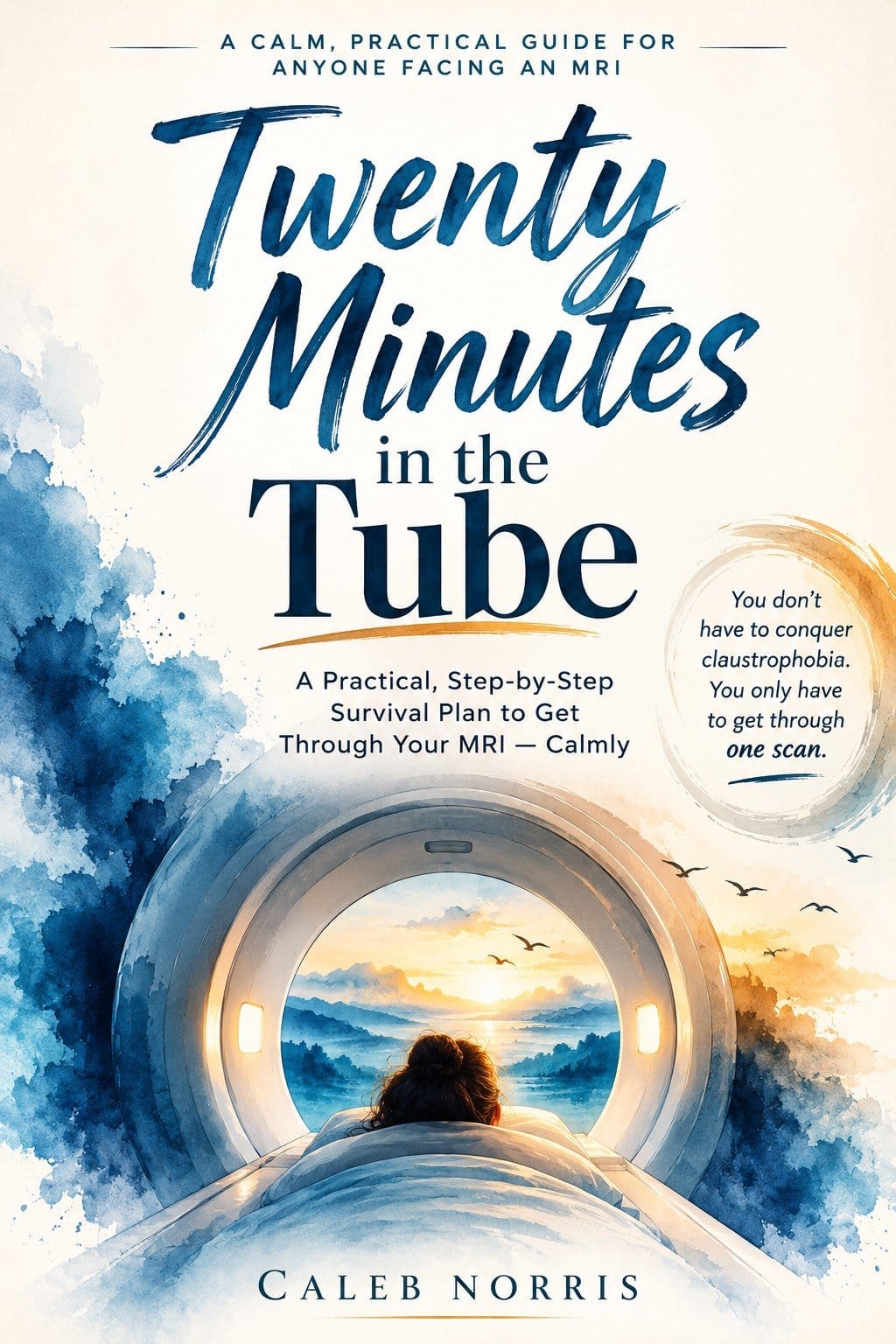
Your scan is booked. And the thought of that narrow tube is keeping you up at night. If you are one of the millions of people who dread an MRI—or if you have previously aborted or canceled a scan due to intense claustrophobia—this book was written specifically for you and the critical days leading up to your appointment. It is not a broad, theoretical treatise on claustrophobia. It is a rapid, high-impact MRI claustrophobia survival guide engineered for one clear outcome: getting through your imaging scan calmly, safely, and without panic. Twenty Minutes in the Tube: A Step-by-Step Plan to Get Through Your MRI Without Panic by Caleb Norris delivers an urgent, scenario-specific roadmap to conquer scan-day dread. Bypassing clinical detachment, this practical manual breaks down the sensory triggers of the MRI bore, offering minute-by-minute mental strategies, somatic breathing tools, and technician communication scripts on how to survive an MRI with claustrophobia and complete your medically necessary imaging on schedule. Whether your scan is scheduled for next month, next week, or tomorrow morning, this guide equips you with the exact tools to walk into the imaging suite with quiet control. Inside This Rapid-Action, Scenario-Specific Field Manual: • The Neurobiology of Bore Panic: Understand why the enclosed space triggers an automatic threat response—and why a time-bound, single event is completely manageable with the right coping architecture. • Demystifying the Scanner Environment: Learn the physical reality of the machine—constant airflow, open ends, safety mirror angles, and the emergency squeeze ball in your hand that gives you 100% control. • The Truth About the Acoustic Noise: How to reframe the rhythmic knocking, buzzing, and thumping sounds, turning the machine's cadence into an auditory anchor for paced breathing. • Still-Body Somatic Reset Toolkit: Clinically informed breathwork and progressive muscle relaxation drills designed specifically for lying flat and completely still inside the bore without triggering movement artifacts. • Active Mental Redirection Scripts: Where to send your attention during the 20- to 45-minute window—eyes-closed visualization protocols, structured mental memory games, and cognitive timeline counting. • The Same-Week Preparation Timeline: A day-by-day countdown plan you can start immediately to desensitize enclosed-space anxiety at home using simple, everyday props. • Technician Communication Templates: Word-for-word scripts to tell the radiographer and imaging staff exactly what you need—from mirror adjustments and music choices to regular time updates over the intercom. • A Minute-by-Minute Scan Script: A sequenced mental roadmap guiding you through positioning, coil placement, table entry, active sequence intervals, and sliding out of the bore. • The Backup Safety Net: Clear criteria and guidance on alternative options if anxiety remains severe—including wide-bore systems, upright/open MRI scanners, and physician-prescribed mild sedation protocols. Who This Book Is For: This manual is engineered specifically for patients scheduled for brain, spine, joint, or abdominal MRI scans who struggle with claustrophobia, panic attacks, or sensory overload. You do not need to cure your claustrophobia forever to get your medical answers. You only have to get through one scan, in one tube, for twenty minutes—and this field guide gives you the exact blueprint to do it. Twenty Minutes in the Tube transforms overwhelming scan-day anxiety into a predictable, step-by-step procedure. Included within the book are references to printable scan-day prep checklists, technician request cards, and companion digital audio-pacing tracks optimized for mobile devices. Stop losing sleep over your imaging appointment. Take command of your scan—one calm, steady breath at a time. Note: This supportive self-help guide provides psychological coping frameworks, somatic pacing tools, and communication strategies for educational and informational purposes. Decisions regarding sedation, imaging alternatives, or medical diagnostic protocols belong solely to your prescribing physician and licensed healthcare team.
Author: Caleb Norris