The Corridor People
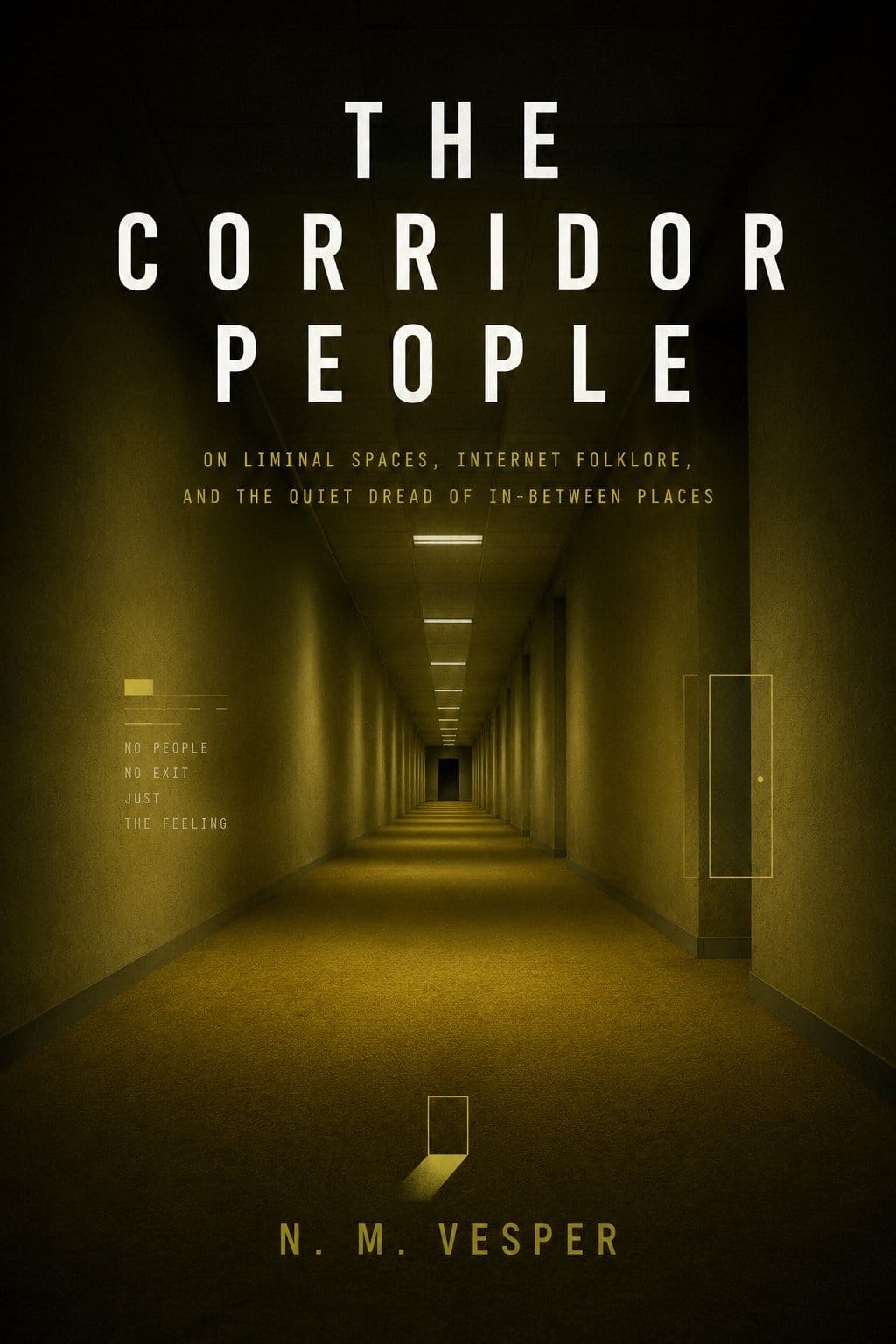
You have felt it. An empty fluorescent-lit hallway, faded industrial carpet, zero people—and a strange, heavy feeling moves through you with no easy name: dread, wrongness, or a crushing homesickness for a place you have never actually been. Millions of people feel it. Together, they gave it a name: liminal spaces. Around this uncanny architectural phenomenon grew the Backrooms, analog horror, and the very first great folklore born entirely on the internet, in real time, right in front of us. The Corridor People asks the fundamental question underneath the entire aesthetic: why does an empty hallway produce such visceral dread when absolutely nothing is happening in it? The answer has two halves. The old half is that humans have always found physical thresholds uncanny—doorways, crossroads, and transition zones—and anthropologists named this liminality a century ago. The new half is intensely personal: an entire generation fell in love with images of in-between places because so many of us are living in a liminal space of our own—the long drift after graduation, the economic limbo between jobs, the waiting years that refuse to resolve. The empty hallway watches you because it is a startlingly accurate picture of where you already live. Widely considered a masterwork bridging digital folklore, spatial psychology, and internet culture, this book explores why virtual spaces evoke such profound emotional resonance. Whether you are researching internet urban legends like the Backrooms, analyzing the psychological appeal of dead malls, or seeking comfort in times of prolonged life transition, this text transforms digital unease into deep self-understanding. Inside this hauntingly atmospheric exploration of liminal architecture and modern anxiety, you will discover: The Architecture of Dread: Unpack why empty hallways, deserted malls, and vacant hotel corridors trigger an ancient, hardwired psychological response in the human brain. The Ancient Threshold: Journey through anthropological history to see how ancient cultures viewed doorways, crossroads, and transitional spaces as sacred and uncanny. The Anatomy of Digital Folklore: Trace how the Backrooms and analog horror evolved as the first true folk mythology generated collectively on the internet. The Liminal Life: Examine the modern economic and social conditions that trap people in endless waiting periods, making empty physical spaces feel like mirrors of internal reality. Atmospheric Vignettes: Experience alternating chapters of insightful cultural essays paired with original, quiet-horror vignettes—transmissions sent straight from inside the corridor. Built like the very thing it describes, the book alternates between sharp cultural analysis and haunting fiction—an essay, a vignette, another essay—further down the hall. And it ends at a door. Because the secret the corridor keeps is not that you are permanently trapped in it. It is that it is a passage—and passages, by absolute definition, always lead somewhere. Keep walking. It ends. A gentle note: This eBook provides cultural criticism, internet history, and psychological perspectives on modern anxiety, not clinical therapy or mental health treatment.
Author: N. M. Vesper