The Closing Gap
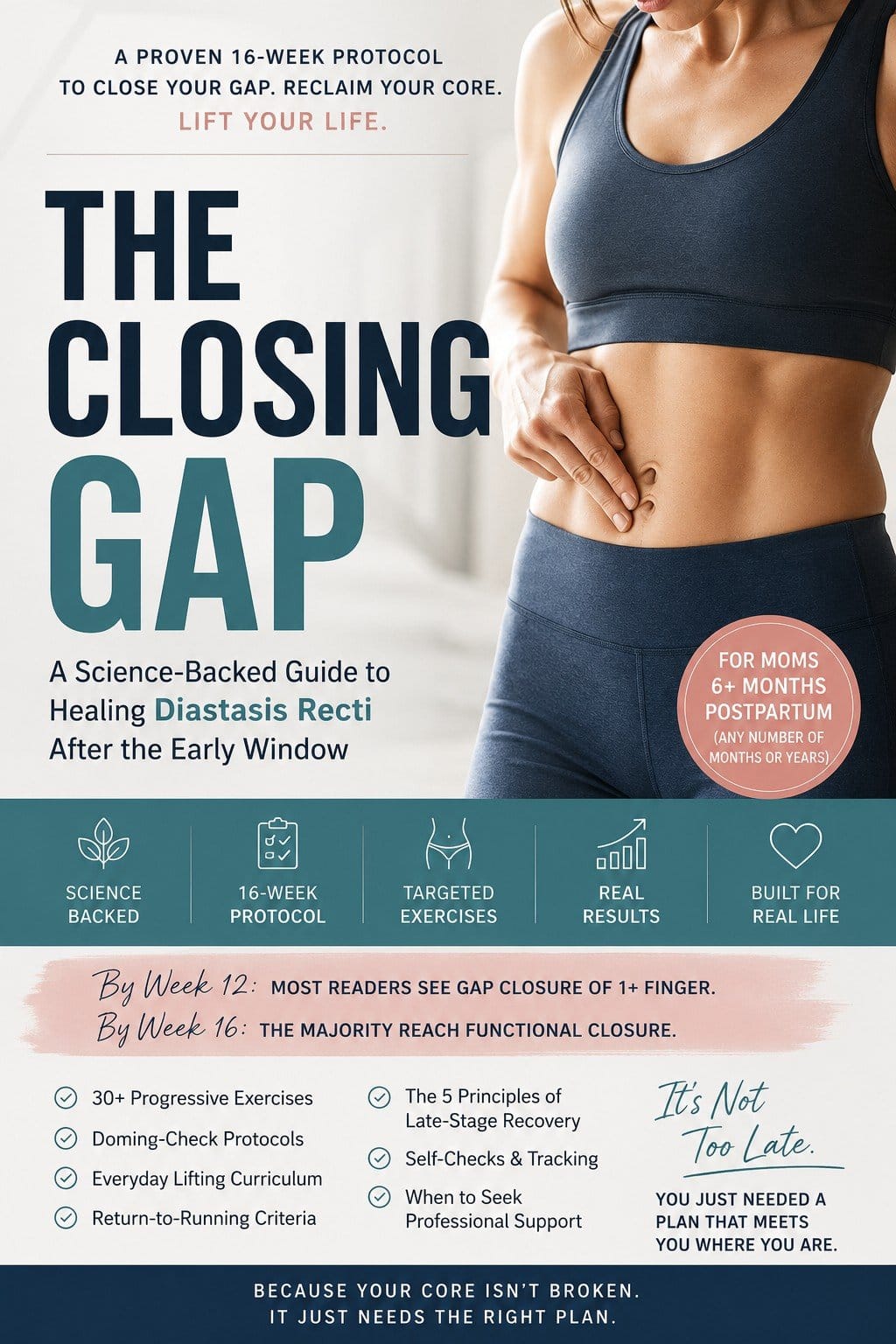
Your Baby Is Eight Months Old. Or Fourteen Months. Or Three Years. The 6-Week Check Happened a Long Time Ago. The PT Discharged You Months Ago. And You Can Still Fit Two or Three Fingers Down the Middle of Your Belly. Every postpartum book on the shelf was written for the early window—those raw first months when "give it time" was still good advice. You've given it time. You've followed the generic protocols. Your body has not, on its own, closed this gap. Meanwhile, the women in the mainstream postpartum guides are pushing strollers and posting about "snapping back." The Closing Gap is the definitive diastasis recti recovery book written specifically for the woman well past the early healing window. Whether you are six months out, a year out, or five years out, the honest truth is that abdominal separation at this stage rarely resolves on its own—but it absolutely can close with the right targeted approach. This comprehensive postpartum core rehabilitation manual bridges the gap between early maternity care and your long-term physical strength. Whether you need a structured postpartum workout workbook that protects your spine or a progressive routine to heal abdominal separation, this guide serves as your ultimate digital companion for rebuilding an integrated, dependable core. What You Will Get Inside: The 16-Week, 4-Phase Protocol: Progress systematically through four distinct structural chapters designed for mature connective tissue remodeling: Reconnect, Activate, Strengthen, and Integrate. The 5 Principles of Late-Stage Recovery: Master the specific mechanical adjustments required to stimulate collagen alignment in the linea alba months or years after giving birth. The Doming Check Protocol: Learn how to accurately spot "coning" or "doming," your single most important intra-abdominal pressure cue to prevent core strain. 30+ Progressive Exercises: Access targeted movements complete with precise physical form cues, scaling options, and core-safe loading progressions. The Complete 3-Finger Self-Check: Master the physical assessment technique to properly measure both the width and the depth/tension of your abdominal gap. The Everyday Lifting Curriculum: Re-pattern your functional movement habits for heavy daily demands, including safely lifting growing toddlers, managing groceries, carrying car seats, and handling laundry. Return-to-Running Criteria: Evaluate your deep core stability and pelvic floor endurance before returning to high-impact fitness, jumping, or heavy lifting. Professional Care Thresholds: Gain clear, honest parameters on when to transition from self-directed recovery to a specialized pelvic floor physical therapist or medical specialist. Who This Book Is For: Moms who are 6+ months postpartum (including those several years out) who still experience a visible pooch or feelings of core weakness. Anyone with persistent diastasis recti measuring a gap of 2 or more fingers. Women who completed standard early postpartum rehabilitation protocols but ultimately plateaued before reaching full functional strength. Readers who are ready to lift heavy objects again—whether that means their kids, gym weights, or everyday life—without pain or instability. Individuals seeking an empowering maternal health guide that respects the body they have right now, rather than the one they had at their six-week check-up. Written for mothers past the early window and fully supported by modern research on connective tissue remodeling and pelvic floor physical therapy, this guide functions as a highly practical diastasis recti exercise roadmap. The text comes equipped with built-in tools, including quick-reference routine sheets optimized for mobile viewing, alongside monthly progress tracking templates available as an integrated digital workbook companion ready for at-home printing. The body you have right now does not have to be your permanent baseline. By Week 12, most readers see a gap closure of 1 or more fingers, and by Week 16, the majority achieve functional closure. The gap can close; you just need the map to get there. Important Safety Note: This book is intended for late-stage recovery and is NOT designed for the first 6 weeks postpartum. It is not suitable for individuals with a diagnosed hernia or severe pelvic organ prolapse. This text serves as an educational supplement and is not a substitute for individualized, professional medical care.
Author: Elena Marsh