The Calm Corner Is the Closet
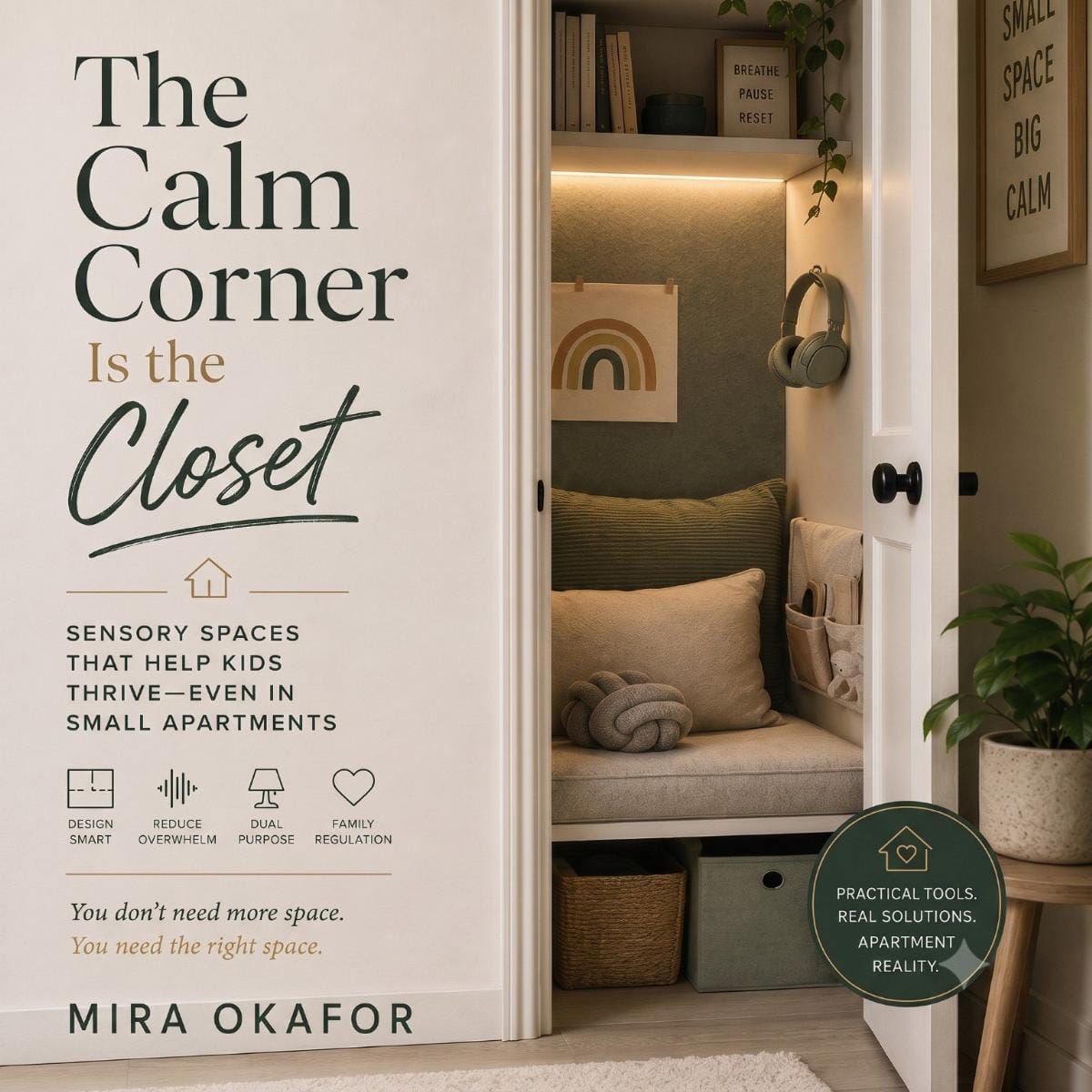
“Create a dedicated calm-down room.” “Set up a sensory gym in your garage.” — said every sensory parenting book, cheerfully assuming you have a garage. If you're raising a highly sensitive or neurodivergent child in a small apartment, every piece of standard advice seems written for a four-bedroom house in the suburbs. The playroom you don't have, the yard you can't afford, the quiet wing that exists only in someone else's floor plan. If you are searching for the best sensory parenting books for small spaces or looking for practical guides on how to create a calm down corner in an apartment, this book was written specifically for your living room. Most advice misses a simple reality: you don't need a suburban footprint to help your child regulate. You just need practical, interior-design thinking adapted for high-sensitivity sensory processing. Written by a parent who has navigated sensory needs entirely within 600 square feet, this design-flavored manual imports clever spatial strategies—zoning, acoustics, footprint efficiency, and dual-purpose setups—into everyday parenting. Every solution is engineered for apartment living: zero extra rooms, modest budgets, and renter-friendly setups that don't require drilling into walls. Inside, you will learn step by step how to: Conduct a home sensory audit: Evaluate your floor plan like a designer to pinpoint subtle triggers, noise leaks, and visual clutter causing overstimulation. Build a compact calm-down corner: Construct a fully functioning regulation nook inside a closet, corner, or pop-up kit within just one square meter of space. Master apartment acoustics: Win the battle against thin walls using targeted sound-softening techniques, masking strategies, and noise-reduction routines. Tame lighting and visual overstimulation: Eliminate harsh overhead lighting and hidden visual chaos to create a calm, soothing atmosphere instantly. Fulfill heavy-work and movement needs: Provide essential proprioceptive and vestibular input indoors without needing a yard or bulky gym equipment. Maximize multi-functional spaces: Utilize dual-purpose design strategies so a single room comfortably serves sleep, play, and emotional regulation. Maintain family co-regulation: Keep both parents and children calm and grounded when sharing tight, high-density living areas. Witty, warm, and intensely practical, this comprehensive guide features a complete resource toolkit: a home sensory audit, an indoor movement menu, renter-friendly design swaps, and a digital-ready Small-Space Calm Nook Blueprint optimized for at-home printing in the resource section. You don't need more square footage to raise a thriving child. You just need the right layout—and this book shows you exactly how to build it in the home you have right now. Note: A practical parenting guide, not medical advice or a clinical diagnosis. If your child requires specialized support, please consult your pediatrician or a pediatric occupational therapist.
Author: MIRA OKAFOR