Strong but Stable
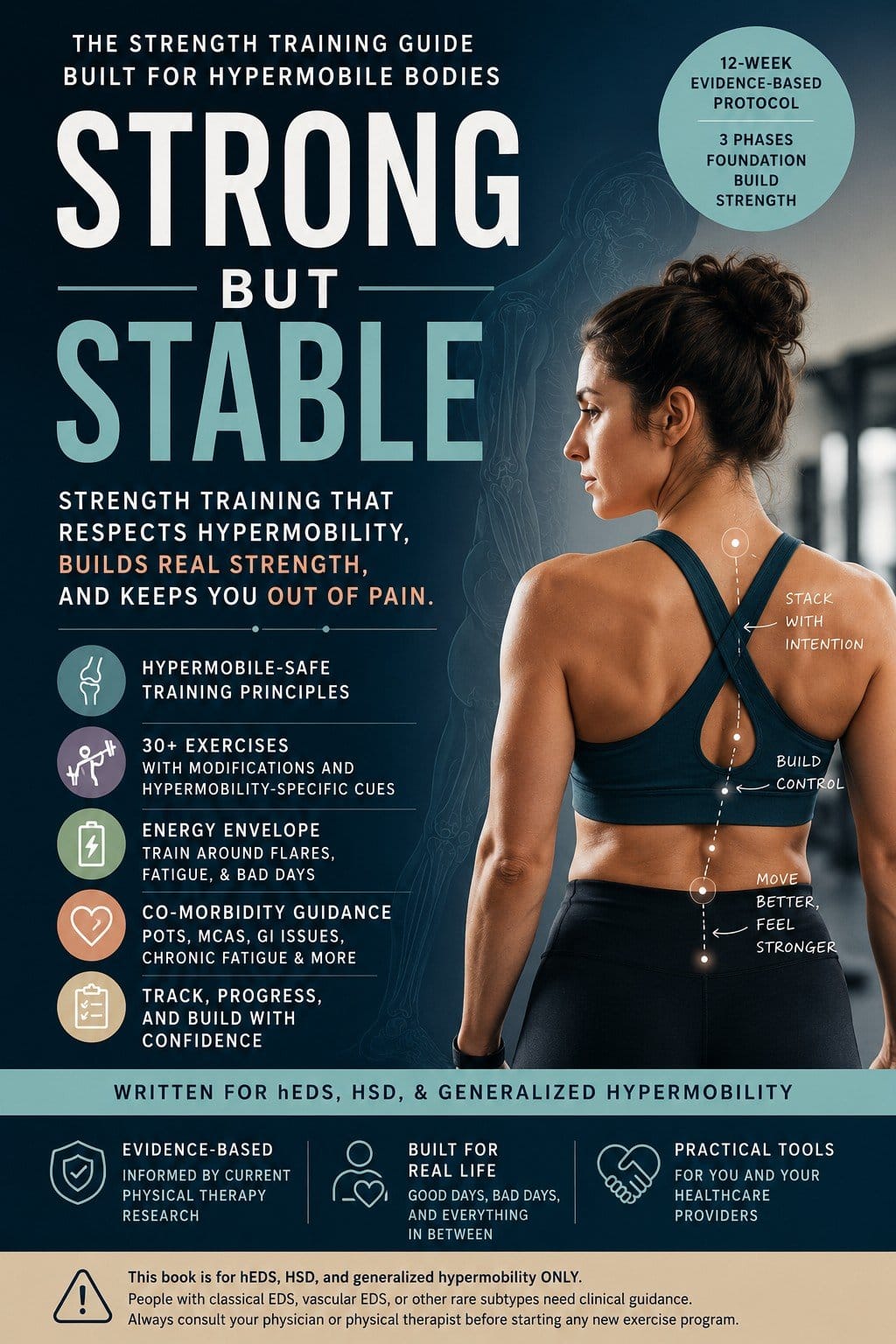
You've Been Told to "Just Lift Weights." Every Program You've Tried Has Injured You. There's a Reason—And It Isn't Your Fault. If you have hypermobile Ehlers-Danlos syndrome (hEDS), hypermobility spectrum disorder (HSD), or any form of generalized joint laxity, you've probably learned the hard way that generic fitness routines aren't just unhelpful—they're actively dangerous. Deep stretching damages your already-loose ligaments, fast-tempo workouts overwhelm your slower proprioception, and traditional end-range loading frequently leads to painful subluxations. The standard "push through the pain" advice triggers inflammatory flares that take weeks to recover from. Doctors tell you to strengthen, physical therapists hand you a brief six-week protocol that runs out before you've built real stability, and personal trainers don't understand why you keep getting hurt. Strong but Stable is the definitive hypermobility strength training book actually written for your unique biology. Built on clinical principles utilized by medical specialists, this comprehensive ehlers-danlos syndrome exercise guide offers a careful, intelligent, and evidence-based 12-week protocol. It provides a clear path to building genuine functional strength on a body that functions differently. Whether you need a specialized hEDS workout plan that protects your joints or a sustainable strategy for symptom management, this text serves as an essential companion for your long-term wellness journey. What You Will Get Inside: The 12-Week, 3-Phase Protocol: Progress safely through a carefully designed timeline divided into three logical chapters: Foundation, Build, and Strength. The 5 Principles of Hypermobile-Safe Training: Master the essential movement rules that prevent micro-trauma and safeguard your connective tissues. Joint Stacking Mechanics: Learn exactly how to align your skeleton, identifying safe mid-range positions to live in and dangerous end-ranges to avoid. 30+ Targeted Exercises: Access specialized movements complete with hypermobility-specific form cues, sensory modifications, and protective adaptations. The Energy Envelope Framework: Discover how to intelligently adjust your training volume around systemic flares, chronic fatigue, and fluctuating bad days. Co-Morbidity Management Guidance: Navigate your exercise routine alongside common secondary conditions like POTS, MCAS, digestive sensitivities, and fatigue. Subluxation Recovery & Setback Protocol: Learn exactly what actionable steps to take to safely stabilize a joint and recover if a minor dislocation occurs. Healthcare Advocacy Guide: Get practical advice on how to locate, vet, and collaborate with an EDS-aware physical therapist or specialized trainer. Who This Book Is For: Adults diagnosed with hEDS, HSD, or displaying generalized joint hypermobility. Anyone with a Beighton score of 4 or higher looking for an appropriate hypermobility joint stability book. People who have been repeatedly sidelined or injured by mainstream gym routines and generic workout templates. Individuals whose medical insurance or physical therapy sessions ended before they built real, everyday physical independence. Readers seeking an honest, empowering joint hypermobility workbook that respects their body's daily physical reality. Written in direct, compassionate language and fully supported by modern physical therapy research, this guide functions as a highly practical fitness roadmap. The text comes equipped with built-in tools, including complete exercise progressions, energy management trackers, and symptom checklists available as an integrated digital companion ready for at-home printing or mobile viewing. Your body was built differently; it's time you had a plan that knows how to train it. Most readers experience meaningful reductions in joint subluxations and daily pain within the first six weeks. By week twelve, you'll be moving with a level of control you didn't think possible—without paying a painful price later. Important Safety Note: This book provides generalized information for hEDS, HSD, and benign hypermobility only. Individuals with classical EDS, vascular EDS, or other rare connective tissue subtypes require individualized clinical guidance. Always consult your physician or specialist before starting any new exercise routine.
Author: Elena Marsh