From Bar to Blade
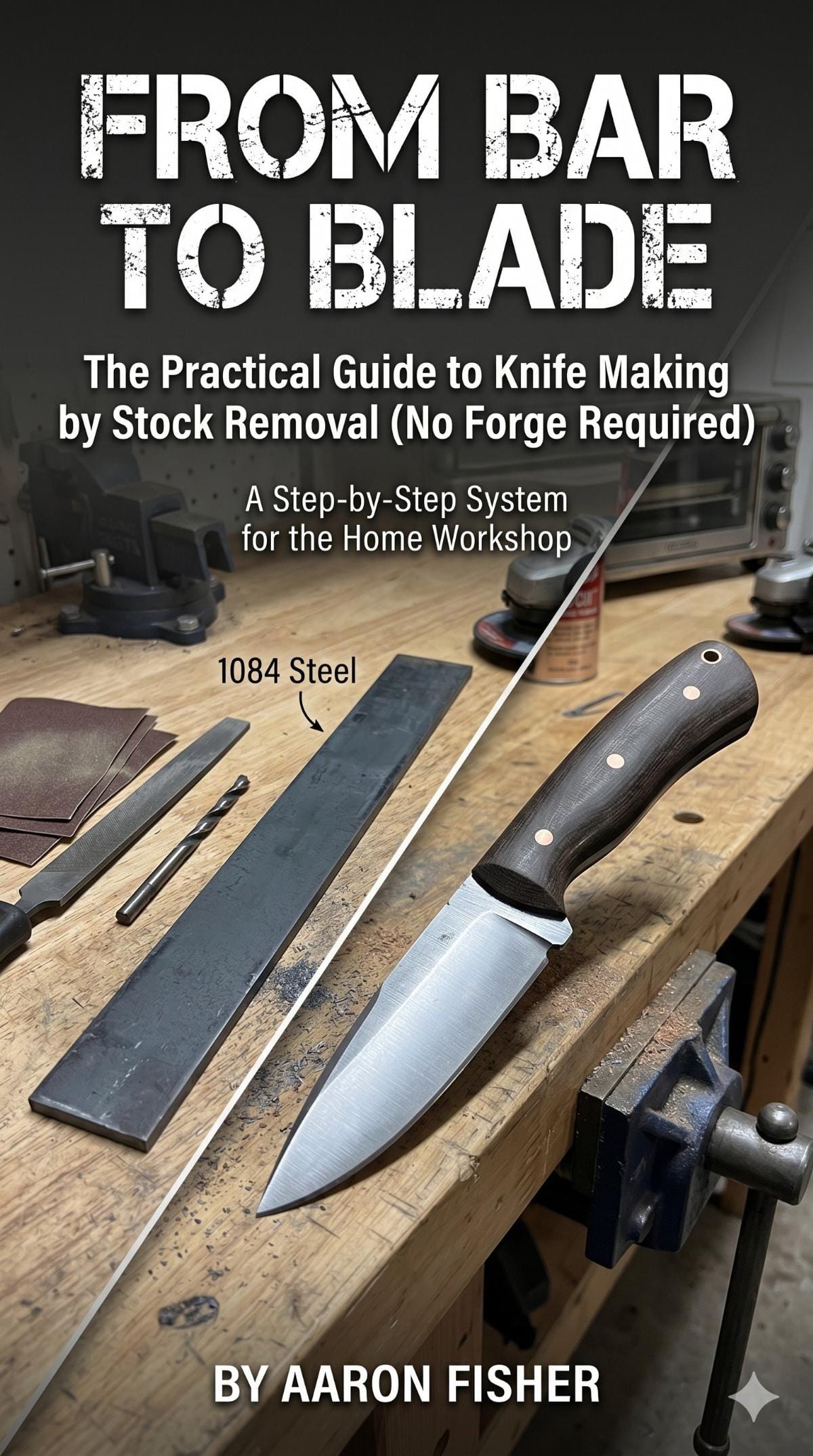
From the outside, watching a master bladesmith online makes the craft look incredibly satisfying—but when you look into how to actually start, you immediately run into walls. Most tutorials assume you have a full forge setup with propane, anvils, and hammers, requiring thousands of dollars in equipment and outdoor space that simply isn't realistic for a typical suburban garage. Others assume you have industrial CNC machinery or high-end belt grinders. If you are facing this frustrating barrier, you are looking for a practical entry point into knife making for beginners that doesn't require a professional blacksmith shop. "From Bar to Blade" is the definitive guide to the third path that almost nobody talks about clearly: stock removal. In under 150 pages of direct, practical instruction, this essential knife making book acts as a step-by-step companion for making your first high-quality knife using a flat bar of steel, an angle grinder, standard files, and a basic kitchen oven. If you are searching for an authoritative bladesmithing book or a realistic how to make a knife book that avoids romanticized fluff, this text delivers an honest 15-to-30-hour blueprint to take you from raw steel to a razor-sharp, functional tool. Inside this highly targeted bladesmithing textbook companion, you will explore: Stock Removal Foundations: Understanding why this accessible methodology works perfectly for home shops, featuring an introduction to beginner-friendly steel selection (1084 high-carbon steel). The First-Knife Profile: Designing a simple, full-tang utility blade, including sketching templates, transferring designs to steel, and safely cutting the rough profile. Bevel Grinding Techniques: Mastering the most demanding part of the build, featuring the essential "marker test" that helps beginners maintain a consistent angle by hand. DIY Heat Treatment & Tempering: Navigating the exact thermal cycles required to harden your blade using a basic torch setup or an oven, alongside guidelines on when to utilize professional send-out services. Handle Construction & Ergonomics: Selecting durable handle materials like Micarta, G10, or stabilized wood, followed by precise pinning, epoxy gluing, and hand-shaping methods. The Final Sharpening Progression: Shifting from coarse stones to fine stropping to give your completed custom blade a professional, durable edge. An Integrated Shop Companion Section: Featuring a steel property reference chart, a tool sourcing guide, a common first-knife mistakes checklist, and a sharpening angle reference matrix (perfectly optimized for your preferred digital knife making workbook layout or at-home printing templates). This handbook was specifically written for the aspiring maker who wants to build a knife over a few weekends without spending a fortune on heavy machinery. This is a dedicated technical guide, not an armchair reference book. Your first knife will not be perfect, and it will have visible mistakes—but it will cut a tomato cleanly and be unmistakably yours. Stop overcomplicating the craft. Get your steel, set up your bench, and discover how accessible traditional tool making can truly be.
Author: Aaron Fisher