Back in the Room
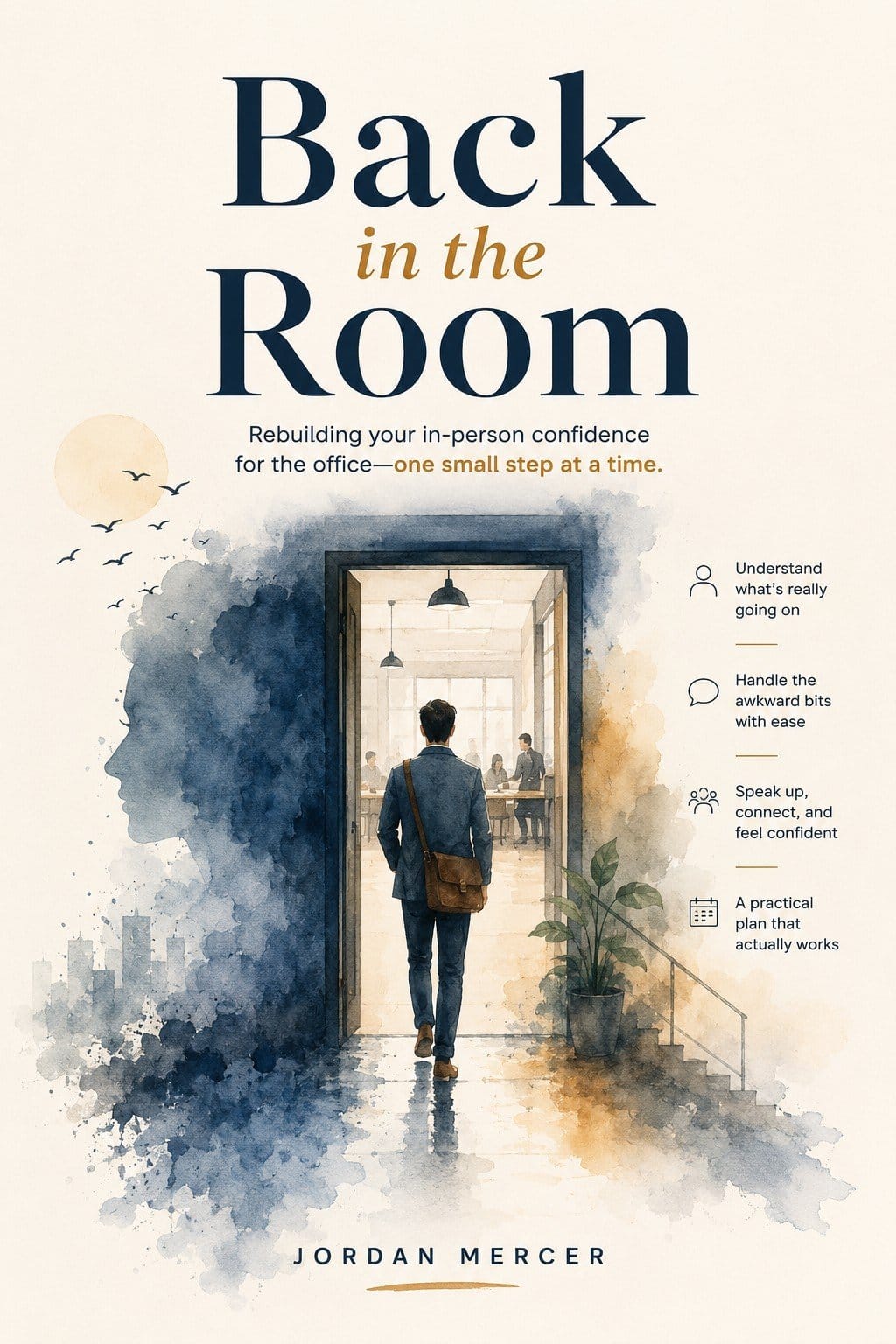
You know the email. Subject line: "An Exciting Update on Our Ways of Working." Translation: You are going back to the office—and your stomach just dropped. After years of working in the comfort and autonomy of home, the prospect of the noisy open-plan floor, the awkward microwave small talk, the crowded elevator, and being physically perceived in boardroom meetings can trigger an acute, paralyzing dread. If that sounds familiar, you are not broken. You are simply out of practice. Social stamina and in-person professional presence are neurological muscles that quietly atrophied behind a screen—and like any skill, they can be systematically rebuilt. Back in the Room: Surviving the Return to the Office When You'd Rather Stay Home by Jordan Mercer is the warm, dry-witted, and refreshingly tactical return-to-office social anxiety field guide designed for hybrid professionals, introverts, and remote workers facing mandatory workplace mandates. Bypassing corporate cheerleading and superficial wellness tips, this practical manual provides situational scripts, somatic regulation techniques, and micro-exposure ladders on how to overcome return to office anxiety and workplace social stress with composed confidence. Whether you are dreading a two-day hybrid cadence or a full-time return to corporate headquarters, this guide equips you with the exact tools to walk through the revolving doors without exhausting your nervous system. Inside This Practical, Scenario-Specific Field Manual: • Rusty, Not Broken: Understand the neurobiology of social deconditioning—why physical proximity feels overwhelming after remote work and why that changes how you approach re-entry. • The Threshold Panic Reset: Learn what your body is doing the moment you step through the lobby doors—and how to down-regulate acute sensory overload before you reach your desk. • Dismantling the Spotlight Effect: Cognitive tools to neutralize the irrational belief that everyone is watching or judging your appearance, body language, or pauses. • Field Guide to Office Friction Points: Concrete navigational frameworks and word-for-word conversation scripts for the four biggest social hotspots: The Corridor & Hallway: Low-awkwardness greeting formulas that keep you moving. The Shared Kitchen & Coffee Station: Effortless, low-friction small talk templates that require zero performance. The Elevator: Comfortable silence strategies and polite conversational exits. The Open-Plan Desk: Managing ambient noise, peripheral movement, and unwanted interruptions without seeming unapproachable. • Speaking Up in In-Person Meetings: Somatic grounding cues and voice-projection drills to share ideas clearly without a racing pulse or throat tightness. • The 4-Week Re-Entry Exposure Ladder: A progressive, step-by-step acclimation schedule of micro-exposures to rebuild stamina at a sustainable pace. • Managing Commute & Sensory Exhaustion: Tactical energy-preservation routines to navigate public transit, recover from sensory overload, and arrive home with energy left for your personal life. • The Pocket-Sized Summary Card: The core principles and de-escalation scripts distilled into a single, printable quick-reference sheet for your badge holder or pocket. Who This Book Is For: This manual is engineered specifically for corporate employees, knowledge workers, managers, introverts, and neurodivergent professionals navigating return-to-office (RTO) policies or hybrid work mandates. You do not have to learn to love corporate culture or become an aggressive extrovert. You simply need a repeatable, low-friction operating system to walk in calmly, complete your workday with dignity, and leave with your energy intact. Back in the Room transforms return-to-work dread into an orderly, manageable routine. Included within the book are references to printable conversation cheat sheets, sensory decompression logs, and companion digital self-assessment trackers optimized for at-home printing. Stop dreading Monday morning. Step back into the room with quiet composure, firm boundaries, and total control. Note: This supportive handbook provides psychoeducational frameworks, behavioral exposure strategies, and professional communication tools for educational and informational purposes. It is intended to complement, not replace, individualized occupational counseling or formal psychotherapy with a licensed mental health clinician.
Author: Jordan Mercer